Tool series optimized for aluminum and non-ferrous metal machining
Tool series optimized for aluminum and non-ferrous metal machining
The DLC-coated DS2000 Series tooling from Tungaloy Corporation has been optimized for aluminum and non-ferrous metal machining, and the company says it delivers superior surface finish, extended tool life, and enhanced productivity across turning and milling operations.
In recent years, the trend toward lightweight design and higher efficiency has accelerated across a wide range of industries, including automotive, aerospace, semiconductor, robotics, and housing materials. Among these, the adoption of aluminum alloys and non-ferrous metals—known for their lightweight yet high-strength properties—has been rapidly expanding. Consequently, the demand for high-precision and efficient machining of these materials is increasing.
However, aluminum is prone to issues such as built-up edge formation and burr generation during cutting, making it difficult to maintain stable tool life and consistent surface finish quality. In the market, there is a strong need for machining solutions that can overcome these challenges while achieving both productivity and quality.
The series features excellent built-up edge (BUE)/adhesion resistance, delivering a bright, high-quality surface finish, high hardness and heat resistance that helps suppress wear progression for stable, long tool life, and strong coating adhesion supports reliable and stable machining. A non-ferrous chipbreaker lineup: AL (positive)/28 (negative) offers improved chip control and reduced chip entanglement.
It is best suited when the user wants stable surface finish and longer tool life in non-ferrous turning, especially where adhesion/BUE is a concern, the company says.
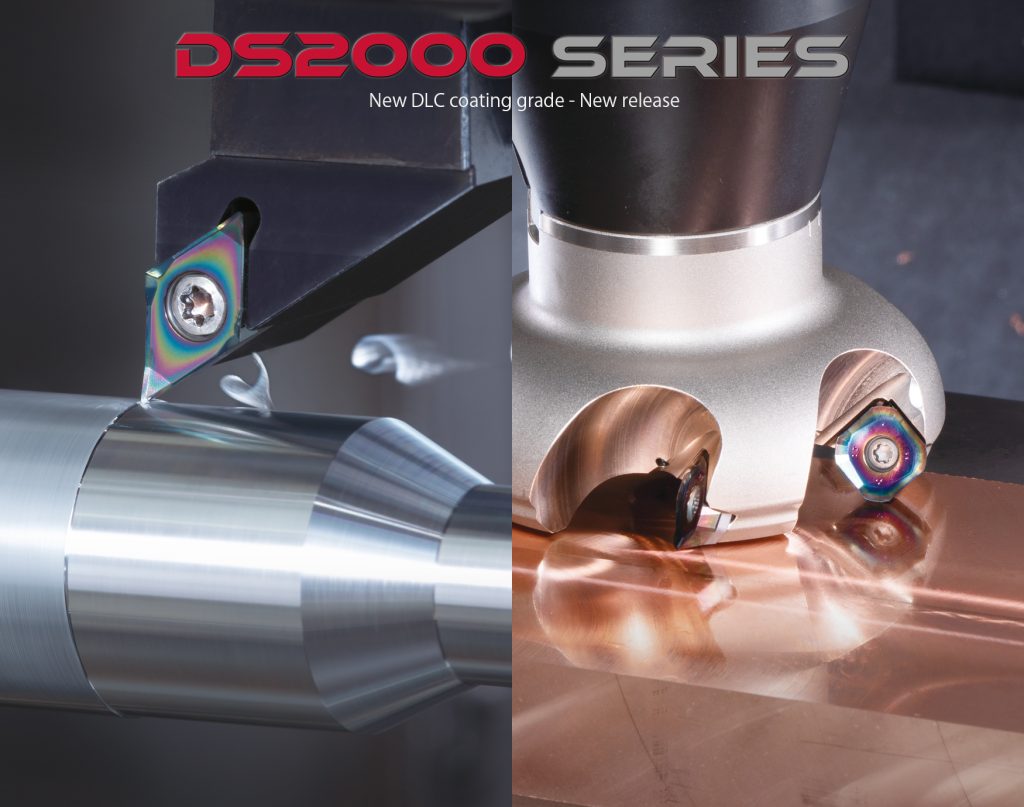
The DLC-coated DS2000 Series tooling from Tungaloy Corporation has been optimized for aluminum and non-ferrous metal machining, and the company says it delivers superior surface finish, extended tool life, and enhanced productivity across turning and milling operations.
In recent years, the trend toward lightweight design and higher efficiency has accelerated across a wide range of industries, including automotive, aerospace, semiconductor, robotics, and housing materials. Among these, the adoption of aluminum alloys and non-ferrous metals—known for their lightweight yet high-strength properties—has been rapidly expanding. Consequently, the demand for high-precision and efficient machining of these materials is increasing.
However, aluminum is prone to issues such as built-up edge formation and burr generation during cutting, making it difficult to maintain stable tool life and consistent surface finish quality. In the market, there is a strong need for machining solutions that can overcome these challenges while achieving both productivity and quality.
The series features excellent built-up edge (BUE)/adhesion resistance, delivering a bright, high-quality surface finish, high hardness and heat resistance that helps suppress wear progression for stable, long tool life, and strong coating adhesion supports reliable and stable machining. A non-ferrous chipbreaker lineup: AL (positive)/28 (negative) offers improved chip control and reduced chip entanglement.
It is best suited when the user wants stable surface finish and longer tool life in non-ferrous turning, especially where adhesion/BUE is a concern, the company says.